Flip a switch.
That’s the whole ceremony. No pledge, no argument about national identity, nobody asking whether the hallway light runs on a sufficiently masculine molecule. The light comes on or it doesn’t.
The light has no idea whether its power came from a gas plant, a coal plant, a dam, a reactor, a wind farm, or a field of panels. It doesn’t know whether the electrons were blessed by a think tank or denounced on cable news. Electricity isn’t a culture. It’s a result.
Be Boring On Purpose
The way out of the culture war is to be boring on purpose.
Nobody asks whether a microwave is “green.” You ask whether it heats the food, what it costs, and whether it fits on the counter. The power behind the microwave deserves the same treatment. Some plants burn fuel to spin turbines. Some split atoms. Some catch falling water, moving air, or sunlight. Each has strengths and weaknesses, and the grid has always been a mix of them, because no single machine is good at everything.
So skip “which source matches my values?” The useful question is “what combination gets us cheap, reliable power with the least nonsense?”
When someone says “you can’t run the whole country on solar,” they’re right. They’re also pushing on an open door, because nobody serious wants a single tool to run civilization. You don’t throw out your hammer because it makes a bad ladder.
In 2025, about 41 percent of America’s utility-scale electricity came from natural gas, 18 percent from nuclear, 17 percent from coal, and 24 percent from renewables: wind about 11, solar about 7, hydro about 6. That’s the mix today. The interesting part is which way it’s moving, and who’s moving it.
What’s Actually Getting Built
Look at what power companies are actually building, not what people argue about on television.
In 2025 the U.S. added about 53 gigawatts of new generating capacity, the most in a single year since 2002. (Capacity is what the plants can put out at full tilt, not what they end up producing over a year.) Solar (27 gigawatts) and batteries (a record 15) made up about 80 percent of it. For 2026, developers told the Energy Information Administration they plan to add a record 86 gigawatts. Here’s the mix:
Two different questions
What runs the grid today, and what's being built next
Gas and coal still generate most of America's electricity. The pipeline of new power plants looks nothing like that.
Share of U.S. electricity generated in 2025. Fossil fuels still made most of it, and gas alone made about two-fifths.
- Solar 7%
- Wind 11%
- Hydro 6%
- Batteries 0%
- Nuclear 18%
- Natural gas 41%
- Coal 17%
| Source | 2025 generation | 2026 planned additions |
|---|---|---|
| Solar | 7% | 51% |
| Wind | 11% | 14% |
| Hydro | 6% | 0% |
| Batteries | 0% | 28% |
| Nuclear | 18% | 0% |
| Natural gas | 41% | 7% |
| Coal | 17% | 0% |
Those plans don’t all get finished on schedule, and some of 2026’s rush is developers racing federal tax-credit deadlines (more on that in the next chapter). But the direction has been the same for years. Solar and batteries are most of what’s getting built because, for a utility that has to buy new capacity, they’re usually the cheapest thing to add and the fastest to put in service.
The investment bank Lazard has published a widely used cost comparison for nearly two decades. Its 2026 edition puts new, unsubsidized utility-scale solar at $40 to $98 per megawatt-hour (a thousand of the kilowatt-hours on your power bill) and onshore wind at $37 to $99, against $51 to $129 for a new combined-cycle gas plant and $175 to $255 for new nuclear. “Unsubsidized renewable energy remains the most cost-competitive form of new-build generation,” it concludes.
Two caveats, and both are fair. First, wind and solar costs have been creeping up lately, along with interest rates, tariffs, and equipment prices. Second, a grid also has to pay to keep the lights on when the sun is down and the wind is still. Lazard tries to price that in, and finds renewables “remain broadly cost-competitive” with gas even after adding firming costs, meaning the backup that covers those gaps. We’ll get to night properly in Chapter 7. But this is why the people who sign the checks keep choosing them.
Where It’s Getting Built
Now look at where.
Texas has led the country in wind power for years. In 2025 it passed California in utility-scale solar generation, and in early 2026 it passed California in battery capacity, measured in megawatts. Iowa gets most of its electricity from wind, the largest share of any state. Kansas, Oklahoma, the Dakotas, Nebraska, and New Mexico all get a quarter or more of their power from wind.
Texas’s grid is famously run as a market: build whatever you want, sell power if anyone will buy it. Wind and solar won a big share of that market on price. They had help, from federal tax credits and from a $6.9 billion network of state-planned power lines, paid for by Texas ratepayers (the people paying the power bills), that connected West Texas wind to the cities. But it was a market where anyone could have built gas instead, and plenty did. In farm country, a turbine on your land is a lease check that shows up whether corn is at four dollars or six. It’s hard to describe a rancher cashing that check as a coastal lifestyle choice.
The electron doesn’t care about the bumper stickers in the parking lot. It turns out the people building the grid mostly don’t either.
Normal Isn’t Neutral
Meanwhile fossil fuels get treated as the baseline, the thing you don’t have to justify. Their flaws are allowed because they’re familiar. A gas plant needs fuel forever, but that feels like normal operations. A coal plant needs mining, rail deliveries, and ash ponds, but that feels like industry. Gasoline swings with wars and OPEC meetings, but that feels like “the economy.”
Normal doesn’t mean neutral. It means the politics got installed so long ago that people stopped seeing them.
Fossil fuels won the twentieth century. They powered modern life, built fortunes, and moved armies, and nobody needs to pretend otherwise. The mistake is treating that history as a permanent license. Something can be historically essential and currently over-defended. Something can be familiar and still be expensive, fragile, polluting, and strategically dumb.
The Fuel Chain
The biggest difference is logistics.
A gas plant is a machine plus a fuel supply, forever. Somebody has to find the gas, drill for it, process it, pipe it, and sell it at whatever the market says that month. An oil-based transportation system is vehicles plus wells plus refineries plus tankers plus shipping lanes plus everything that can go wrong with any of them.
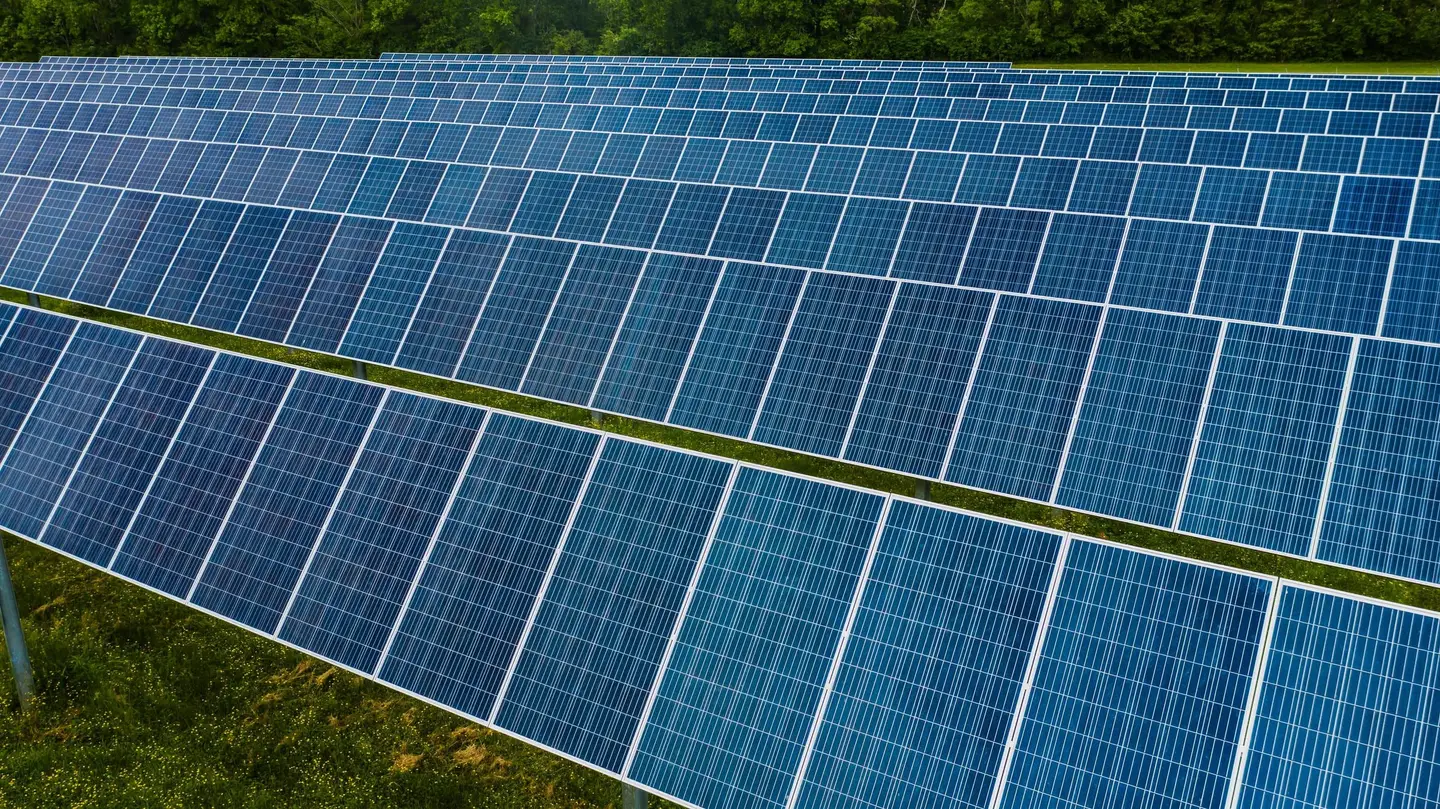
A solar farm has to be manufactured, installed, maintained, and eventually replaced. Panels typically lose about half a percent of their output per year, and today’s modules are expected to last around 30 years. But once it’s up, the fuel arrives on its own. Nobody has to discover, extract, buy, ship, hedge, insure, defend, or lobby the sun into rising.
The fuel supply chain is zero miles long. (The hardware supply chain is another story: it’s long, and too much of it runs through China. Chapter 6 deals with that.) Fewer people take a cut between the energy source and your light switch, which ought to appeal to conservatives, libertarians, and anyone who’s ever stared at a utility bill wondering how many middlemen got paid before the fan turned on.
The Obvious Objection
The obvious comeback is the one you’ve probably already thought of: sure it’s cheap, it’s subsidized. Somebody is getting rich off this.
That’s a good instinct. Somebody is. So let’s follow the money, and let’s follow it all the way.