There is a moment in the American energy argument where a real infrastructure problem turns into a joke.
Transmission lines? Good luck.
Permitting? Impossible.
Interconnection queues? Bureaucratic swamp.
Storage? Maybe someday.
Building enough cheap power to run the next century? Sure, right after everyone in America agrees on a zoning meeting.
And then the room laughs, or sighs, or shrugs, and the incumbent fuel system gets another year.
That is the part that should bother us.
Not because the problems are fake. They are not fake. The grid is hard. Transmission is hard. Siting is hard. Local trust is hard. Power markets are hard. A country with states, counties, utilities, regulators, landowners, courts, tribes, environmental rules, property rights, and voters will always move differently from a centralized state.
Fine.
But a hard thing is not the same as a punchline.
AI Made The Wire Visible
This is where the AI story is useful, even though this is not an AI book.
Caleb Writes Code has a video about why the United States may be disadvantaged against China in the AI race because of power. The framing is data centers, chips, models, and hyperscalers. But underneath the tech story is the old energy story with better branding:
Where does the electricity come from?
How fast can it be built?
Can it move?
Can a real project get connected before the opportunity passes?
The old internet ran on data centers too, but the next wave is different. AI loads can be enormous. Caleb’s video talks about data centers moving from the old tens-of-megawatts scale into at least 100 megawatts, with some expansion plans discussed in the 1-to-2-gigawatt range. The International Energy Agency makes the same basic point at the system level: electricity demand from data centers is expected to rise sharply this decade as AI expands.
That does not mean every AI projection should be swallowed whole. Tech people can also hype themselves into a fever. Some efficiency gains will be real. Some projects will be delayed. Some announced loads will never materialize.
But the stress test is real.
If one industrial customer can show up asking for power at the scale of a small city, the energy system stops being wallpaper. The wire becomes part of industrial policy. The substation becomes part of national competitiveness. The permitting meeting becomes part of whether the future gets built here or somewhere else.
That is why AI is useful in this chapter. Not because AI is sacred. Because AI makes the hidden bottleneck visible.
The AI frame is only the hook. The durable question is older and bigger: who can build and move enormous amounts of electricity when the economy asks for it?
VideoEast Data, West Compute
China looked at this problem and gave it a very literal name: Eastern Data, Western Computing.
The basic idea is not mystical. China’s eastern cities have huge demand, dense tech activity, and expensive land. Western and inland regions have more space and large energy resources, including coal, wind, solar, and hydro depending on the region. So the state started organizing national computing hubs and data-center clusters to push some computing work west while connecting the system back to eastern demand.
This is not a climate fairy tale. China still burns a huge amount of coal. Some western data-center power is not clean. Some renewable energy still gets curtailed because the grid cannot absorb or move it perfectly. Provincial politics still exist. Waste and overbuilding still exist. The point is not that China found a magic spreadsheet.
The point is that China treated the map as an assignment.
It asked where the loads were, where the land was, where the power was, and what would have to connect them.
That sounds obvious until you compare it with the American habit of treating every new wire like an invasive species.
A Wire The Size Of A Country
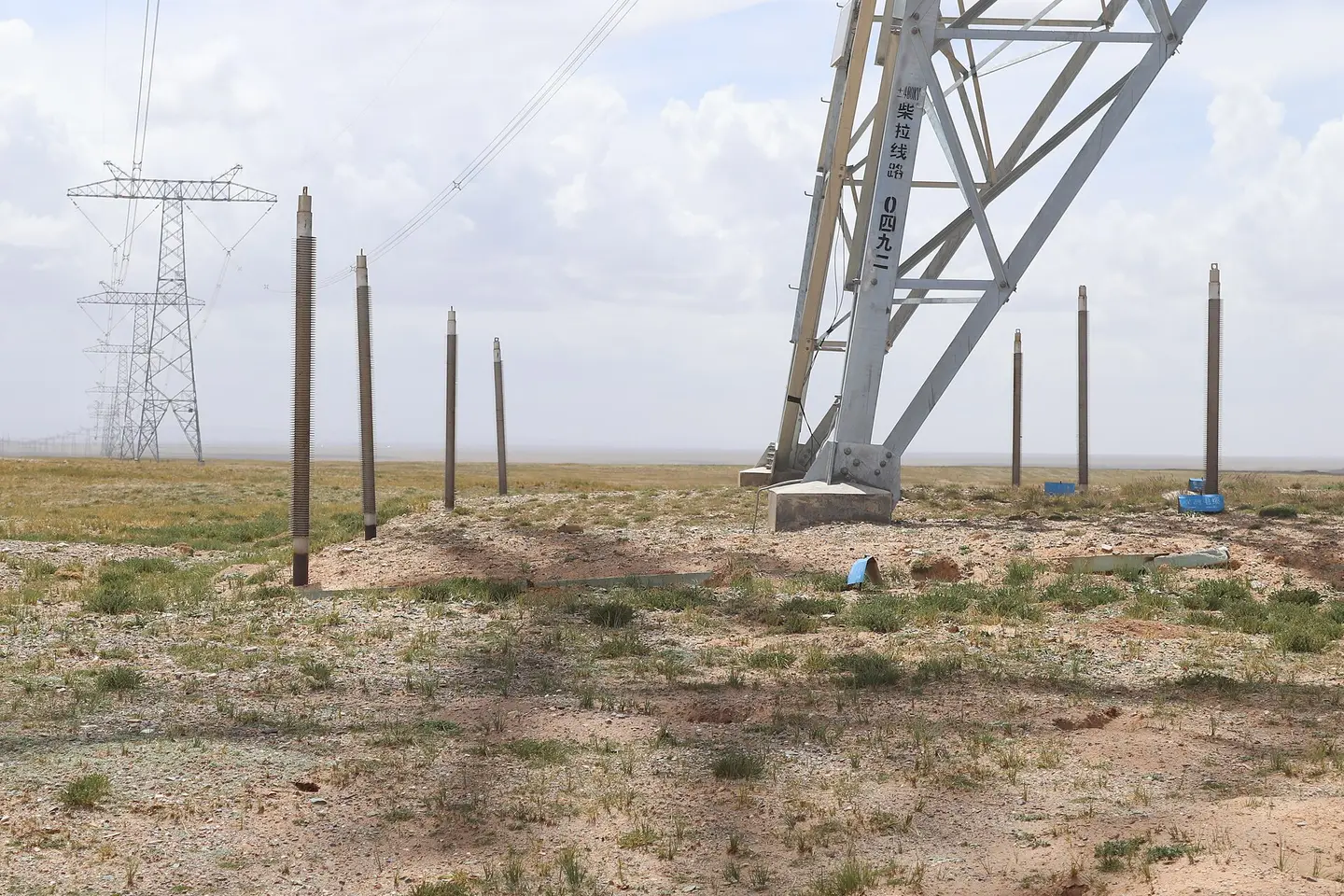
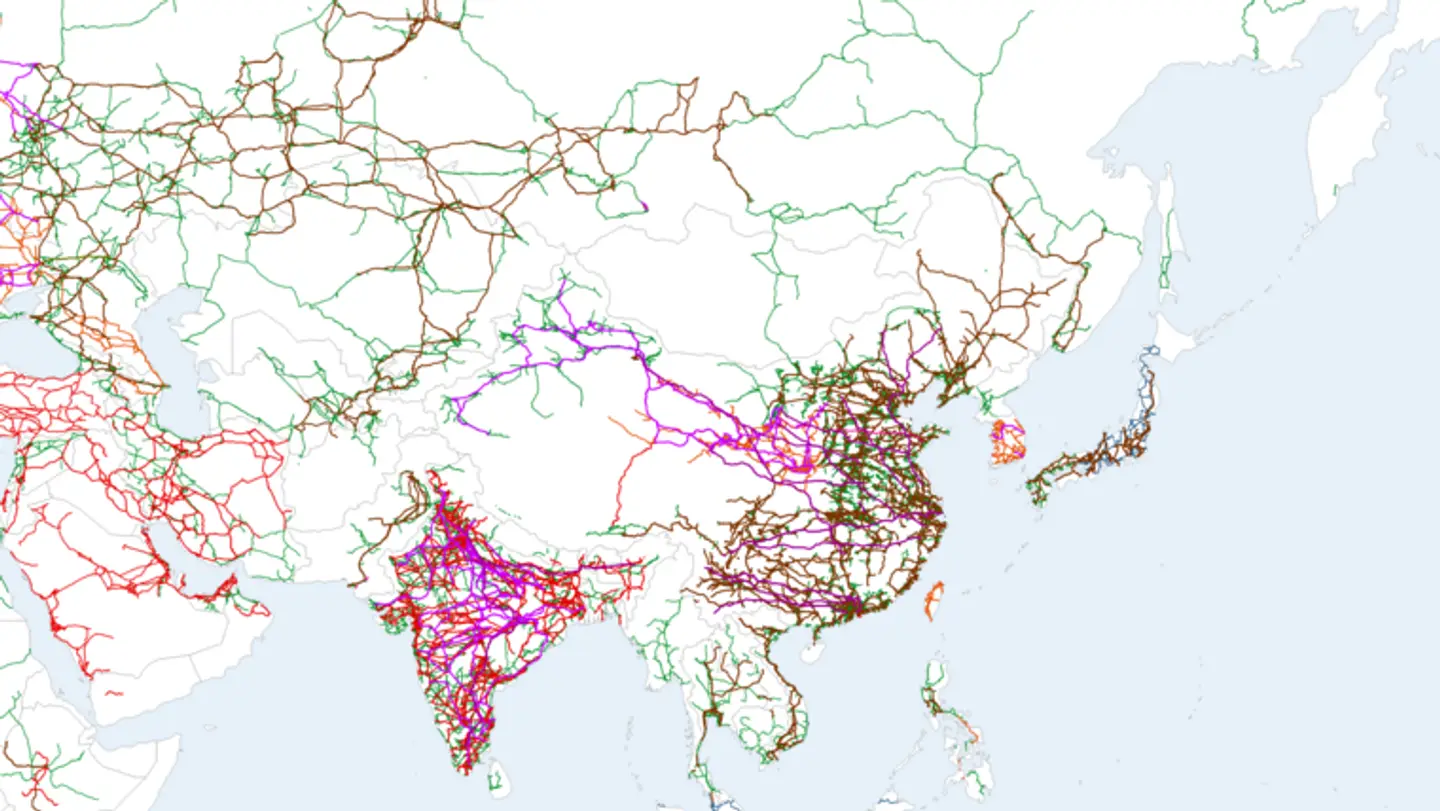
Ultra-high-voltage transmission sounds like a comic-book phrase, but it is very literal. Global Energy Monitor describes China’s UHV threshold as alternating current at 1,000 kilovolts or more, or direct current at plus-or-minus 800 kilovolts or more. As of December 2025, GEM counted 45 operating UHV lines in China.
That is the scale difference.
The Xiangjiaba-Shanghai UHVDC project moves hydropower from southwest China toward Shanghai. Hitachi Energy describes it as an 800-kilovolt line built in 30 months, with thousands of towers and gigawatts of transfer capacity. Another famous line, often described as Changji-Guquan or Zhundong-Anhui, runs from Xinjiang toward eastern China at roughly 1,100 kilovolts, around 3,300 kilometers, and 12 gigawatts.
Do not get lost in the numbers. Put the map in your head.
That second line is not quite Los Angeles to New York. It is closer to Los Angeles to Chicago, give or take the route. In American terms, that is not a local project. That is a continental-scale electrical decision.
China is building thousand-mile extension cords for industrial strategy.
America is still deciding whether the extension cord has the right personality.
Scale check
The wire is the strategy.
UHV is not a mood. It is a voltage class.
Mostly generation and storage waiting to connect.
Industrial advantage, not moral performance.
America Has The Machines In A Waiting Room
The frustrating thing is that America is not out of ideas.
America has excellent engineers. America has big capital markets. America has solar resources, wind resources, geothermal possibilities, nuclear expertise, battery deployment, software, universities, trades, manufacturing ambition, and a ridiculous amount of entrepreneurial energy. The country is not helpless.
But a lot of useful machinery is stuck in a waiting room.
Berkeley Lab’s interconnection work has tracked a gigantic queue of proposed generation and storage projects waiting to connect to the grid. The queue is not the same thing as built capacity. Some projects are speculative. Some should not be built. Some will die for good reasons. But the size of the queue still tells you something: there is a lot of cheap-power ambition piled up at the door.
The door is the problem.
Transmission is the same story. The ACEG and Grid Strategies report on recent U.S. transmission buildout found painfully low new high-voltage mileage in the 2020s compared with what a growing, electrifying economy needs. You do not have to memorize every line-mile figure to understand the pattern. We are trying to run a bigger economy through a grid we keep treating as someone else’s homework.
This is where the “what about the grid?” argument becomes useful, if it stays honest. Yes - what about the grid? What about transmission, interconnection reform, transformers, local benefits so communities are not treated like scenery, and utilities that make more money building the wrong thing than the useful one?
Those are real questions. But they are not arguments for giving up. They are the assignment.
Tommy Was Right About The Hard Part
This is why the Landman clip in Chapter 3 is so annoying.
One of Tommy Norris’s strongest points is true: you cannot electrify a country by announcing that everyone should flip a switch. You need transmission. You need storage. You need substations. You need workers. You need materials. You need years of boring execution.
That is a good point.
Then the scene uses that good point as a trapdoor.
It turns “we need to build the system” into “therefore the fuel system we have is permanent.” It turns a construction problem into fatalism. It takes the assignment, folds it into a cowboy monologue, and lets the audience feel like quitting is realism.
That is backwards.
If the grid is the bottleneck, build the grid.
If transmission is the bottleneck, build transmission.
If permitting is the bottleneck, fix permitting without treating every community like an obstacle.
If local trust is the bottleneck, make projects that share benefits, respect landowners, and answer real concerns instead of treating people like paperwork.
If transformers are the bottleneck, build transformer capacity.
If the utility model rewards dumb infrastructure, change the utility model.
The hard part is not proof that the work is fake.
The hard part is the work.
Do Not Learn The Wrong Lesson
There is an easy bad reading of this chapter, so let’s handle it directly.
The lesson is not “authoritarianism good.”
No.
China can move faster partly because it can force decisions through a political system Americans should not want. That matters. Consent matters. Property rights matter. Environmental review matters. Local communities matter. A country that can build a power line quickly can also crush people quickly. Do not turn competence into romance.
The lesson is narrower and more humiliating:
A free country should still be capable of building wires.
Democracy should not mean every necessary project enters a maze and comes out as a consultancy invoice. Freedom should not mean a grid so clogged that cheap domestic power cannot reach the people who need it. Local control should not mean every region gets to benefit from national strength while refusing every piece of national infrastructure. Skepticism should not mean familiar fuel systems get treated like weather while new electrical systems have to survive a televised personality test.
We do not need to become China.
We need to build like the problem is real.
This is the practical contrast: China is not pure, but it is treating solar, wind, storage, and transmission as strategic advantage. That should make Americans competitive, not smug.
ABC NewsThe American Assignment
America should be good at this.
Not in a fake patriotic way. In the actual way.
We built continent-scale systems before. Railroads. Highways. Rural electrification. The internet. Military logistics so sprawling they almost become geography. We know how to build enormous things when the country decides they count as real.
So count this as real.
Solar farms are real.
Wind farms are real.
Batteries are real.
Nuclear plants are real.
Transmission corridors are real.
Heat pumps, transformers, substations, control rooms, and boring grid software are real.
The question is not whether every tool is perfect. The question is whether America wants the advantage that comes from building the system around useful tools.
That is the assignment.
Not to worship China.
Not to worship solar.
Not to pretend the grid is easy.
To stop letting the difficulty of building the future become free advertising for the past.